

The 2026 Midterms and Form I-9: What Changes for Employers, and When
Read the article

A state driver's license is a List B document on Form I-9, so it proves identity and nothing else. The employee pairs it with a List C document, usually an unrestricted Social Security card or a birth certificate, and the license has to be unexpired on the day you examine it. It doesn't matter whether the card has the REAL ID star. The USCIS Handbook for Employers (M-274), Section 13.2 lists a license from any state or U.S. territory as List B item 1.
Where licenses go wrong is the renewal window. An employee's license expired last month, the new card is in the mail, and they hand over the old card with a DMV printout. A receipt showing someone applied to renew a license doesn't count on Form I-9, but a state-issued temporary license does, and the two look a lot alike at the counter. The rest of this guide covers which one you're holding and what to write down.
Every one of these is the same document for Form I-9 purposes. The star, the border-crossing chip, and the federal-purposes warning all come from other federal programs, and none of them moves a license onto List A.
| What the employee shows | Form I-9 list | Accept it? |
|---|---|---|
| Standard license (no REAL ID star) | List B | Yes, with a List C document |
| REAL ID license (star in the corner) | List B | Yes, with a List C document |
| Enhanced driver's license | List B | Yes, with a List C document |
| License marked "Federal Limits Apply" or "Not for federal purposes" | List B | Yes, with a List C document |
| Paper temporary license issued by the state | List B | Yes, if it has a photo or identifying details, and you follow any conditions printed on it |
| DMV receipt showing a renewal application | None | No |
| Expired license | None | No |
REAL ID decides whether a card gets someone through a TSA checkpoint or into a secure federal building, and that's been enforced since May 7, 2025. It has nothing to do with employment verification. An enhanced driver's license, which a few states issue for land and sea crossings from Canada and Mexico, catches people because it feels like a passport card. It's still a state license, though, so it sits on List B and needs a List C document beside it.
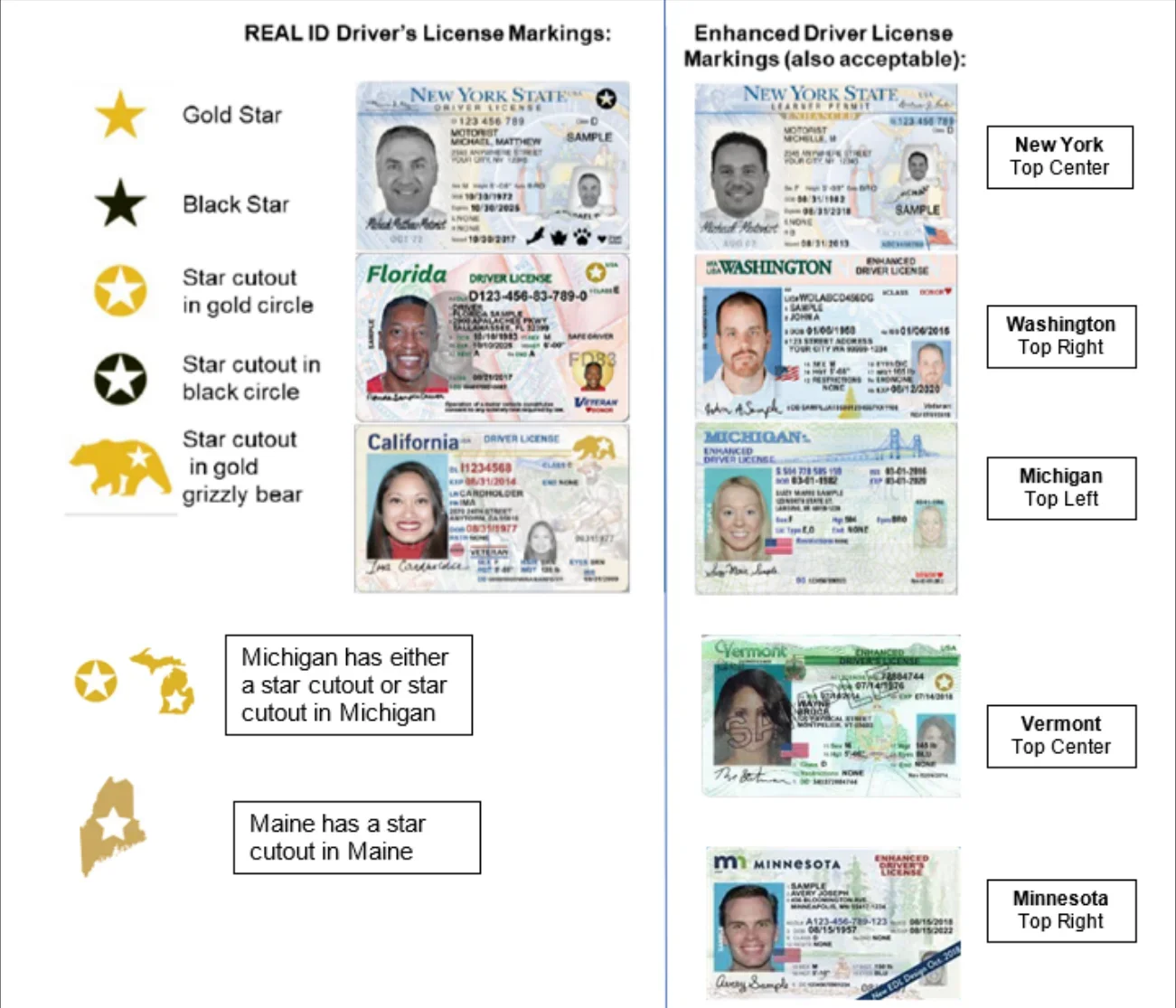
Licenses marked "Federal Limits Apply" are the ones managers turn away most often. USCIS says plainly that "some states may place restrictive notations on their licenses. For Form I-9 purposes, you may accept these licenses." When California asked about its AB 60 licenses, which carry that marking, the USCIS response treated them as List B documents. DOJ's Immigrant and Employee Rights Section (IER) also cautioned employers against rejecting a license because of who a state usually issues that type of card to, since an authorized worker turned away on that basis can file a discrimination charge.
The license has to be unexpired at hire. During the pandemic DHS let employers accept expired List B documents, and that policy ended May 1, 2022. An expired card on its own is out, whatever the employee tells you about the renewal.
What the DMV handed them decides the rest. A temporary license issued by the state is an acceptable List B document under the USCIS I-9 Central Questions and Answers, as long as it has a photo or identifying details like name, date of birth, and address. Follow whatever conditions the state prints on it, and if the temporary says it's only valid with the old card, look at both. A receipt that only shows a renewal application is different, because the M-274's receipt rule in Section 4.4 covers replacements for a lost, stolen, or damaged document and nothing else. That employee picks another option from the lists, such as a U.S. passport, or a state ID card or other List B document with their List C document.
A receipt for a replacement license works for 90 days from the first day of work for pay. Write "Receipt" followed by the document title in the List B column, along with the List C document. When the new card arrives, cross out "Receipt," enter the new license details in the Additional Information field, and initial and date the change. An employee who brings a different List B document instead gets a new Section 2, attached to the original Form I-9, with a short note explaining why.
You leave the I-9 alone, because USCIS tells employers not to reverify List B documents, so an expired license on an I-9 you completed correctly stays the way it is, and so does the List C document next to it.
The license goes in the center column and the List C document goes on the right, with List A left blank. For the license itself, enter these four fields.
For a temporary paper license, record the details from the temporary itself. A Canadian driver's license is also List B, as item 9, and its issuing authority is the province.
A DMV renewal printout recorded as a List B document leaves that I-9 without valid proof of identity. Our I-9 audit team finds those, along with expired licenses accepted at hire, and walks you through fixing each one before an inspection notice shows up.
E-Verify adds one rule on top of Form I-9: any List B document has to have a photo, per the E-Verify User Manual, Section 2.1, and that's the only document requirement an E-Verify employer can add. A license with no photo still works for an employer who doesn't use E-Verify.
When you pick driver's license as the List B document, E-Verify asks which state issued it. In states that share license data through the RIDE program (Records and Information from DMVs for E-Verify), the system checks the license number against that state's motor vehicle records. A failed check comes back as a DHS mismatch, the employee has eight federal government working days to call DHS, and if DHS can't resolve it, they may need to contact their DMV. Typing the expiration date wrong produces a "Close Case and Resubmit" result, so you close that case and open a new one with the correct date.
The one we find most is a new-hire packet that tells people to "bring your driver's license and Social Security card." It reads like a helpful checklist, but specifying documents is exactly what the anti-discrimination rules prohibit, and the IER guidance on Form I-9 is clear that employees choose from the lists. Jobs that involve driving are where this gets tangled. You can check that a driver holds a valid license as a job qualification, but keep that request separate from Form I-9, tell the employee why you're asking, and still let them pick their I-9 documents.
The smaller misses come up in almost every audit. Some managers record an enhanced license under List A and skip List C, others reject a "Federal Limits Apply" card outright, and a few accept a photocopy, even though Section 2 requires the original. We also see teams set reverification reminders off the license expiration date, which never applies.
"When an employee hands over a piece of paper from the DMV, read what it says across the top before you write anything down," says Patricia Duarte, Director of Compliance at i9 Intelligence. "A temporary license gets recorded like any other license. A renewal receipt goes back to the employee along with the list of acceptable documents, and usually they have something else at home that works. The ones we end up fixing in audits happened on a busy morning with three more new hires waiting at the counter."
No, it's List B and only proves identity. The employee also presents a List C document, such as an unrestricted Social Security card or a birth certificate.
No. A license without the star is just as acceptable for Form I-9 as one with it, and REAL ID only matters for flights and secure federal facilities.
Not at hire, because the temporary policy allowing expired List B documents ended May 1, 2022, so the employee needs an unexpired license, a state-issued temporary license, or a different document from the lists.
Only when it's for replacing a lost, stolen, or damaged license, and then it's good for 90 days. A receipt for a renewal isn't acceptable, though a temporary license the state issues during renewal is.
No. It works for some border crossings, but on Form I-9 it's a state driver's license, which makes it List B.
No. List B documents are never reverified, so leave the I-9 alone. Our I-9 documents list shows which documents do come back up for reverification.
No. The employee chooses which acceptable documents to present. A driving job can require a valid license as a qualification, handled as a separate step from the I-9.
Our compliance team has been reviewing driver's licenses on Form I-9 for 28 years. Reach us here: