
How Much Does Remote I-9 Verification Cost? 2026 Prices Compared
Read the article

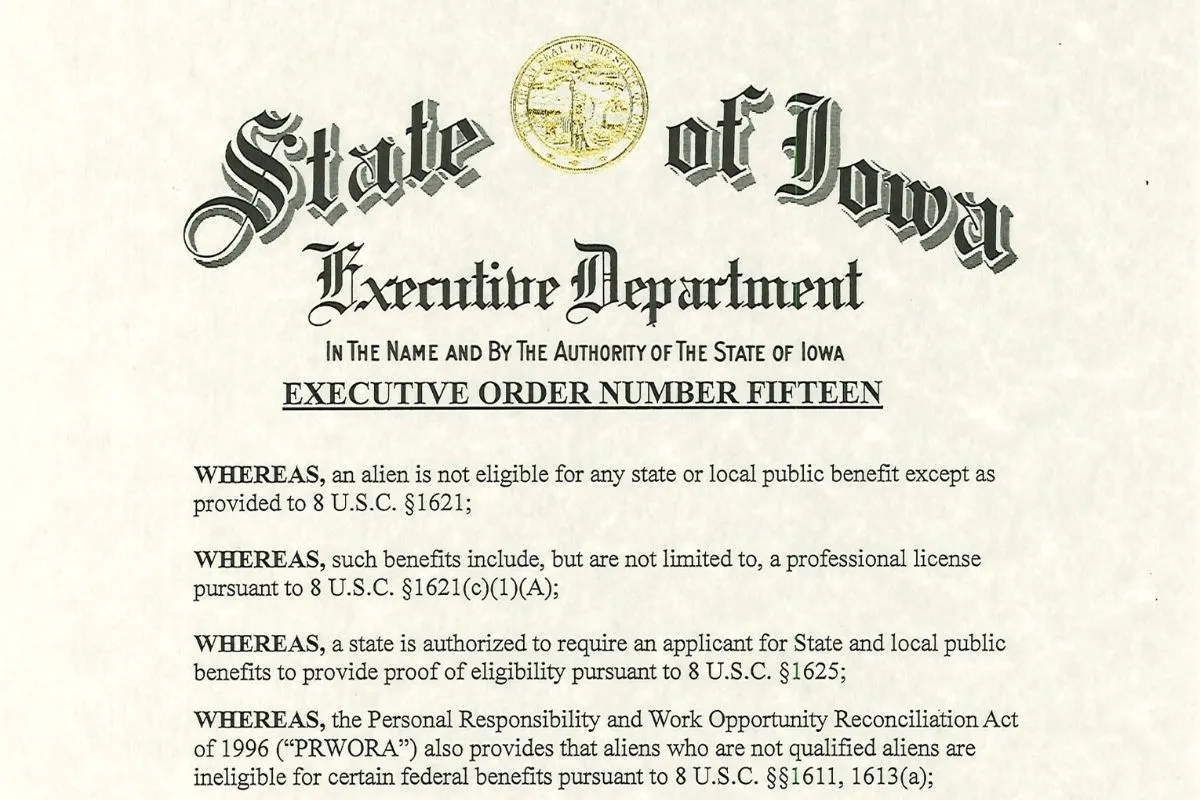
On October 8, 2025, Executive Order No. 15 Iowa was issued by Governor Kim Reynolds, dramatically shifting the landscape of employment eligibility and professional licensing in the state. This executive action mandates that every executive branch agency and the Iowa Board of Regents use E-Verify to confirm employment eligibility and the SAVE Program to validate immigration or citizenship status before issuing any state-issued professional or occupational licenses.
This directive arrives in response to a high-profile case involving Des Moines Public Schools Superintendent Ian Roberts, who was arrested for being unlawfully present in the U.S. despite holding a leadership position in Iowa’s public education system. The case brought national scrutiny to Iowa's vetting processes and accelerated political momentum behind mandatory work eligibility verification.
Executive Order No. 15 requires that all state agencies and the Board of Regents:
The order specifically aligns Iowa with federal immigration laws under 8 U.S.C. §1621, §1611, and other PRWORA statutes, ensuring state programs do not provide public benefits to individuals who are not legally eligible.
Find out where your compliance gaps are. Use our free I-9 Risk Calculator to estimate your audit exposure, or book a demo to see how i9 Intelligence can help.
The Roberts case highlighted a critical failure in verifying employment eligibility, as he had allegedly provided falsified documents, including a Social Security card, to complete his Form I-9. E-Verify, had it been used, would have flagged expired work authorization and likely prevented his hiring. The situation prompted calls from Iowa legislators for mandatory E-Verify use, especially in public employment and state licensing bodies.
Governor Reynolds cited the Roberts case directly: “This executive action... will verify the legal immigration or citizenship status for anyone requesting a state-issued professional license before they provide services for Iowans.”
1. Mandatory Use of E-Verify: All Iowa executive branch agencies and the Board of Regents must now:
2. Licensing Verification via SAVE: Before issuing a license, agencies must:
3. No Licenses Without Verification: Licensing agencies are prohibited from granting professional or occupational licenses unless citizenship or immigration status is confirmed.
4. Non-Discrimination Clause: The order reaffirms that enforcement must avoid discrimination based on race, religion, gender, or national origin.
Agencies must:
This impacts entities like:
For HR Teams:
For Applicants:
Compliance with Executive Order No. 15 requires an integrated approach:
While Executive Order No. 15 aligns with federal law, its aggressive implementation may invite legal scrutiny, particularly over access and privacy. Critics have voiced concern over:
Still, momentum is growing. State Senator Julian Garrett has pledged to reintroduce legislation requiring E-Verify for all employers, citing Roberts’ case as a legislative catalyst.
Executive Order No. 15 represents a defining shift in how Iowa enforces immigration-related hiring and licensing practices. By mandating the use of E-Verify and SAVE across all executive agencies, the state sets a new precedent for compliance and risk management.
Agencies and HR teams must view this not just as a legal requirement, but as an opportunity to tighten internal controls, prevent future oversight failures, and build public trust in employment and licensing practices.
Your Action Plan:
Agencies that take these steps will be well-positioned not only to meet the current requirements but to withstand future scrutiny in an evolving regulatory landscape.
Our team of I-9 and E-Verify experts is here to help: